
01
Client Overview
Background of Channel Digitalization System Construction
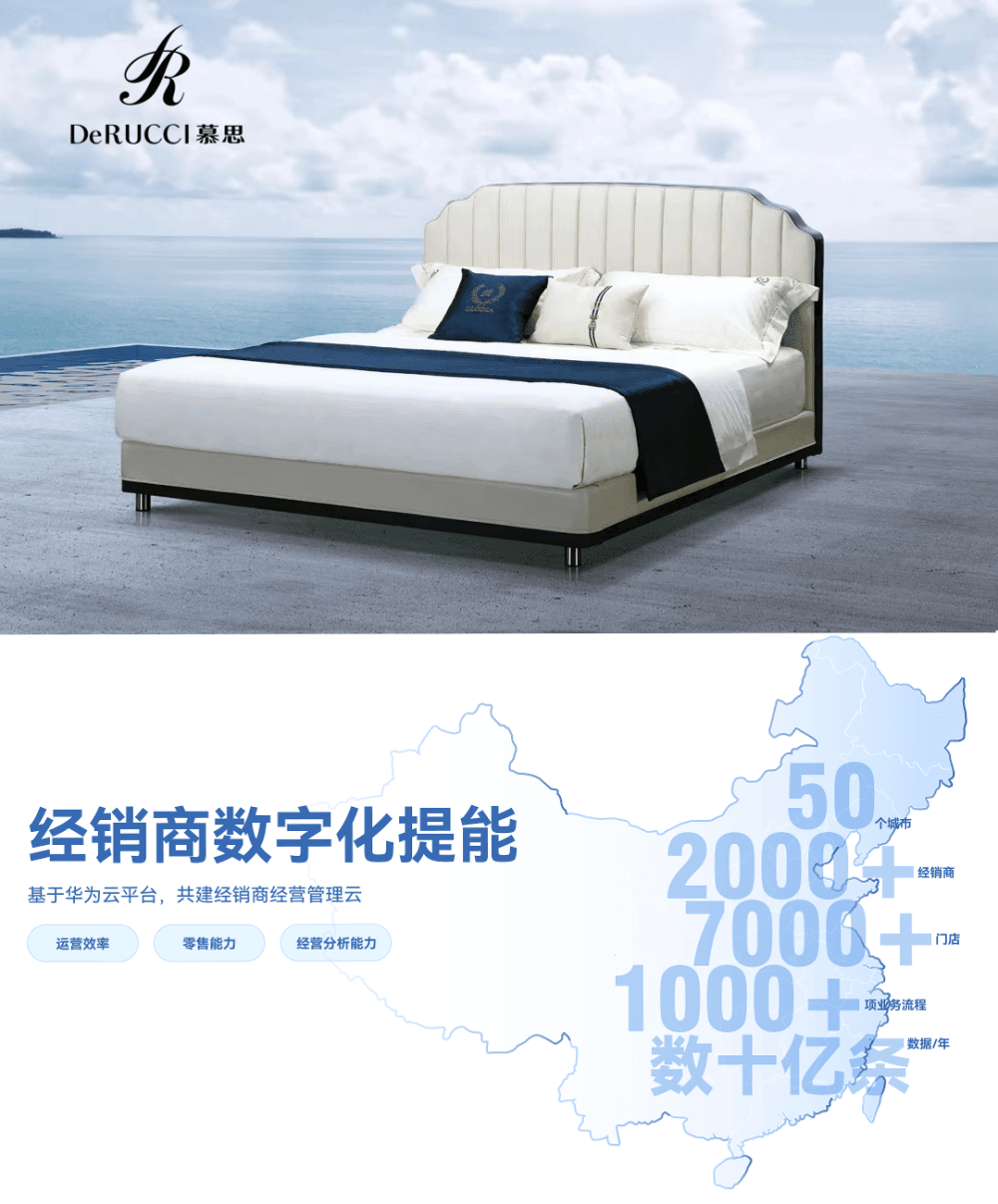
Deer Health Sleep Co., Ltd. (Stock Code: 001323),A resource integrator for healthy sleep, providing users with customized healthy sleep solutions.It owns seven major brands under its umbrella: Deer, Deer International, Deer Sofa, Deer Home, V6 Home, TRECA, and Sleek. Offline sleep experience stores cover more than 20 countries and regions globally, with over 2000 franchise dealers nationwide and over 7000 offline stores, providing healthy sleep experiences for tens of millions of customers.
As the group's business scale expands,the original CRM system could no longer support existing operations and failed to meet Deer'sheadquarters and dealer operational management needs,channel digital transformation was urgent.
In 2021, Deer initiated a tender for the dealer system procurement, conducting multi-round comparisons of products and service teams,Jieno's product solution and the professionalism of the implementation team were recognized by Deer Group, and Deer ultimately reached a strategic cooperation with Jieno,to jointly build an integrated dealer operation management platform. It is expected that through thisproject achieve full coverage of dealer business scenarios, improve dealer operational efficiency; establish a "digital operation management system", enhance retail capabilities; through the accumulation of business data, achieve analysis and decision-making of real-time operating data, and improve operational analysis capabilities.
02
Industry Business Models and Challenges
Competition among home furnishing enterprises is competition along the industrial chain.
With consumers' pursuit of a better home and the overall youthfulness of consumers, the entire home furnishing industry has gradually trended towards providing one-stop service home living solutions for customers. Whole-house decoration, diversified channels, etc., have become common development trends for various enterprises, while also raising higher requirements for product richness, value for money, delivery speed, service experience, etc. The home furnishing industry has long faced pain points such as poor consumer shopping experience, long industrial chains, and severe information barriers;Forbrand manufacturers, the existing problems are mainly reflected in the following aspects:
① Unable to reach end customers directly.Brand manufacturers cannot directly grasp consumer user profiles and data; they cannot directly receive consumer feedback, lack user traffic entry points, and there is a communication gap between the brand and end users.
② Low efficiency in business collaboration between headquarters and distributors.Brand headquarters and distributors have their own management systems and do not adopt a unified information platform; this leads to low business collaboration efficiency between the two parties and high communication costs. For example: distributors cannot obtain order status in time; distributors find it difficult to quote for non-standard products; when distributors make payments, they cannot know in time whether the headquarters has received the funds, etc.
③ Distributors vary in capability and find it difficult to improve their own management and operation capabilities.Mostdistributors are influenced by factors such as scale, strength, quality, management level, and business awareness, making it relatively difficult to achieve self-empowerment.For example,single customer acquisition channels, lack of tools for traffic generation and customer acquisition; customer follow-up and sales order creation use tools like WeChat for communication without system support, leading to low conversion rates; lack of professional designers, unable to complete design independently;Nocomprehensive sales guidancetraining system, sales guidesWeak sales capabilities; lack of after-sales service systems, inability to form a closed loop, etc.
④ The essence of competition among home furnishing enterprises is competition within the industrial chain.For home furnishing enterprises to achieve business model iteration from selling furniture to selling lifestyle solutions, the key lies in end-to-end connectivity, integration, and collaboration across the industrial chain; therefore, establishing an efficient and competitive channel digitalization system is indispensable.
03
De Rucci Headquarters Digital Transformation Initiatives
Building a Channel Operation Management Cloud to Enhance Overall Industrial Chain Operational Capability
① Establishing a Digital Highway Between Channels for More Agile Response
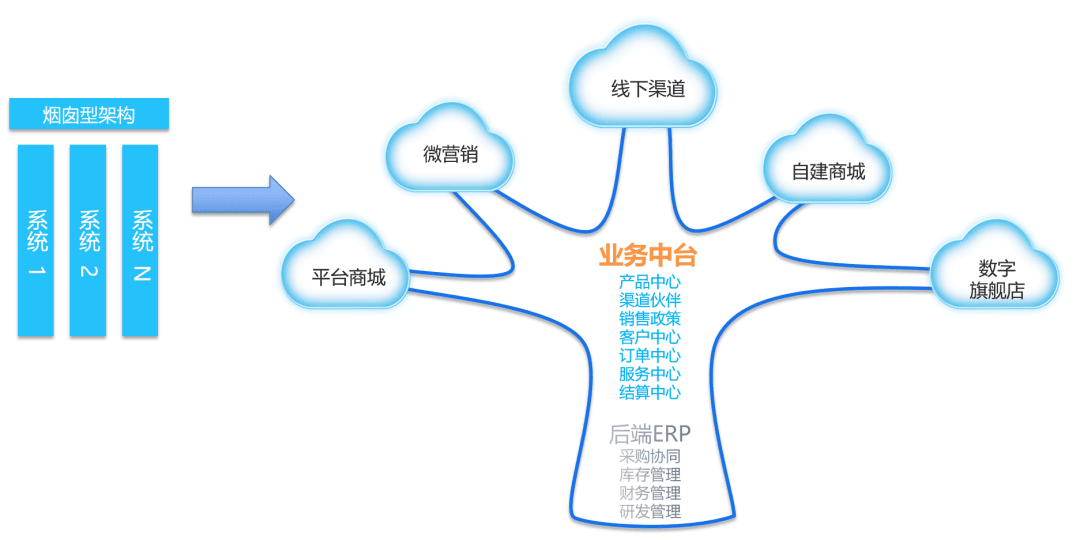
② Empowering Distributors Through Operation Management Systems, Focusing on Improving Their Operational Capabilities
Perfecting operating policies and rules, reconstructing business processes to create systematic operational standards across the entire flow from customer acquisition, service conversion, ordering, shipping/installation, to financial accounting. Simultaneously, build an integrated distributor operation management platform. Utilize information technologies such as marketing traffic-driving tools and mobile ordering to empower distributors comprehensively and grow together with them.
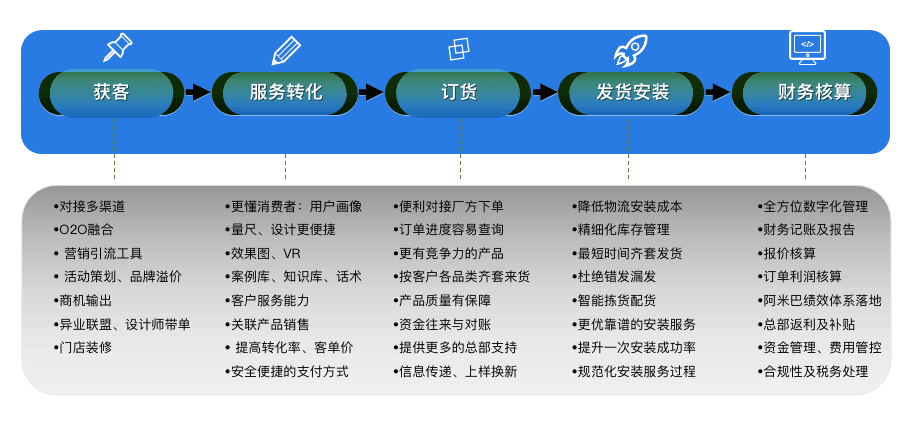
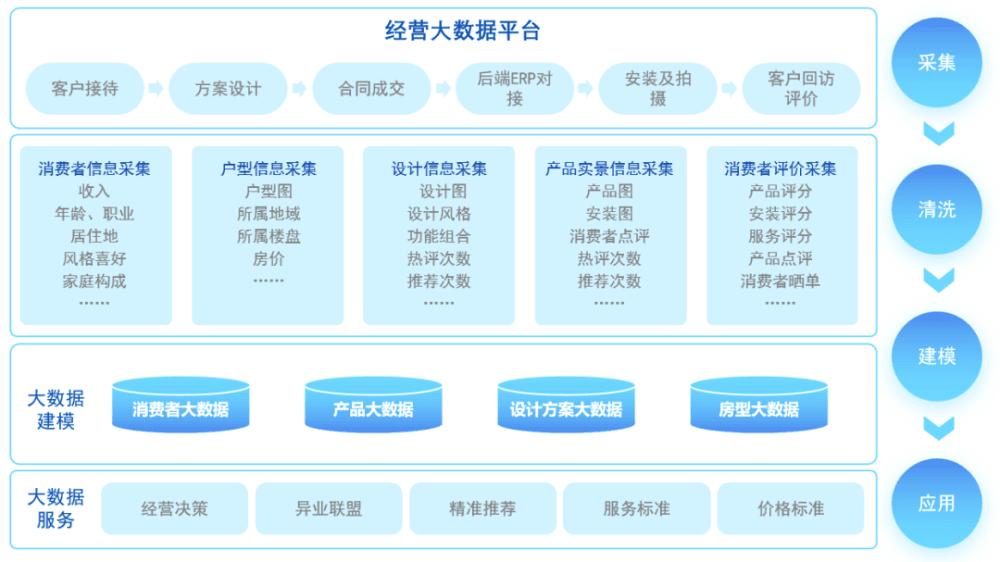
③ Building a Channel Operation Big Data Platform to Provide Decision Support
Based on the accumulation of business middle platform data, utilizing big data technology for massive data collection, storage, cleaning, analysis/mining, and visualization, we build a channel operation big data platform to achieve precision marketing.
04
De Rucci Distributor Application Solution
Comprehensive Empowerment for Distributors
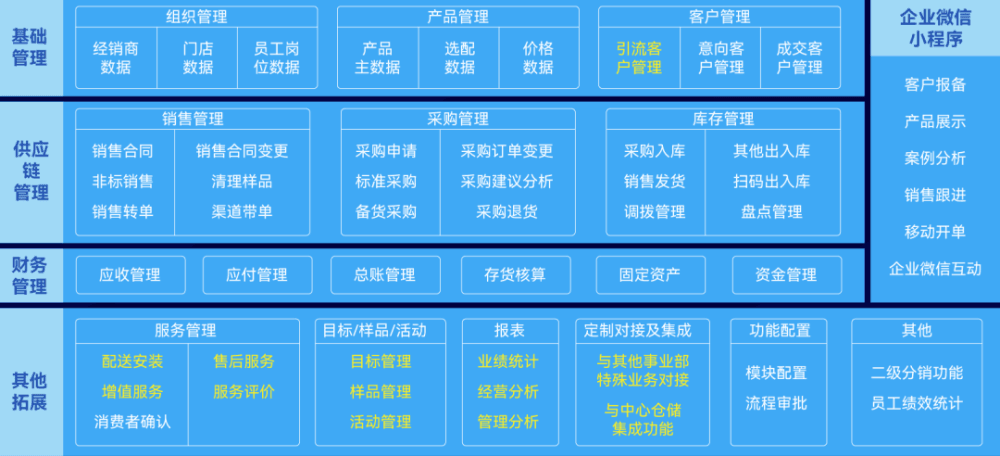
Project Module Scope
Centered on customers, establish full lifecycle customer management. Through the Dealer Basic Operation Platform mini-program, record customer consumption behavior, service records, and customer tags to form user portraits, achieving customer full-cycle, full-touchpoint behavior data analysis, supporting enterprise customer insight and customer value mining. Sales guides can use customer tags and shopping paths, combined with limited-time activities, coupons, etc., to achieve precise marketing, increasing repurchase rate and average order value.
Standardize customer opportunity management, support stage definition for opportunities, different stages can execute different operations (e.g., appointment visit, case sharing, intent quotation, etc.). Conduct opportunity reporting and follow-up via mini-program, mark customers at different stages, and reasonably allocate follow-up resources. Facilitate sales guides to flexibly follow up with customers and maintain follow-up information on the mini-program, accumulating customer portraits; leaders can view the overall progress of opportunities on the mini-program and PC end. Meanwhile, the system supports flexible configuration of opportunity recovery and warning rules, combined with warning recovery strategies, ensuring every opportunity is followed up in time, improving conversion rates.
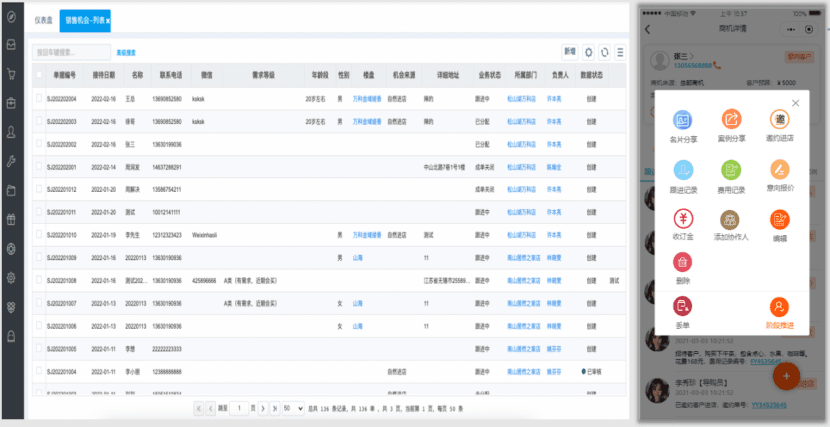
Customer Opportunity Management Diagram
Products are the core competitiveness of enterprises. On the basis of existing product data standards, through parts universality, configuration characteristic standardization, data management standardization, material standardization, build a complete set of product data standardization system; lay a digital foundation for subsequent enterprise product R&D, large-scale customized production, BI data decision making, etc.; meanwhileBy establishing product configuration standards,solve CRM product data issues, prepare for future realization of C2M business model.
In the past, if customers wanted to conduct product configuration, dealers all needed to configure in the system backend, so the frontend could conduct configuration operations;If it is a non-standard product, manual modification of product price is also required, the system cannot automatically price, operation is cumbersome and timeliness and flexibility are poor.; throughThe Dealer Basic Operation Platform standardizes product selection data to achieve parameterized selection. Within the systemparameters such as selection categories, ranges, pricing formulas, and constraints are pre-configured. When sales personnelplace orders on the PC or mobile end, they can perform product selection and view quotes via the selection function; the system supports standard selection, non-standard selection, and kit selection to meet diverse consumer needs.
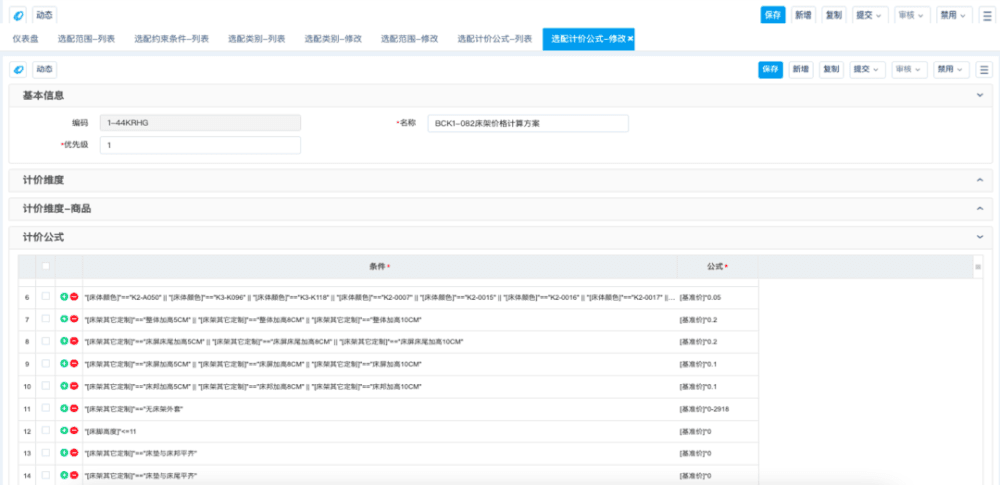
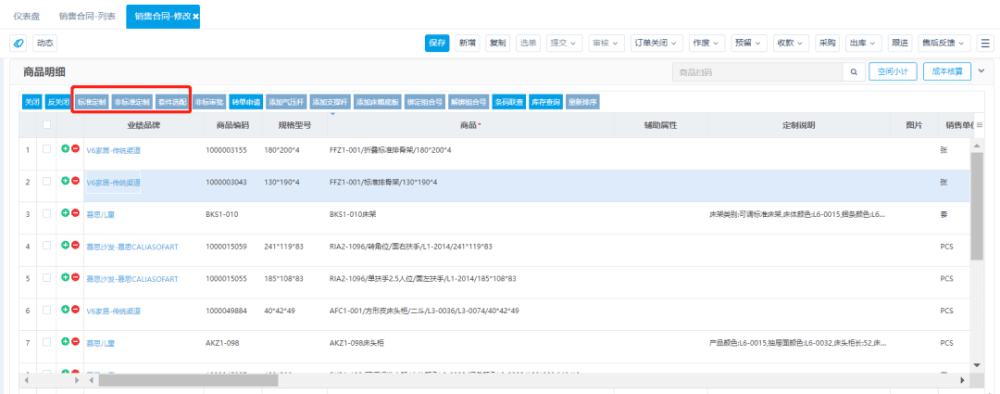
Product Selection Function Schematic
The Dealer Basic Operation Platform supports PC and mobile ordering. For scenarios where one order involves multiple sales consultants, the system provides a merged ordering function and allows setting staff split ratios; meanwhile, the system supports cooperative order bringing, recording different cooperation channels (e.g., designers, design companies, etc.), and supports direct commission rebates to channels based on commission information after contract closure.
When sales representatives visit clients outside, they can directly display product catalogs for client selection, query product inventory information via mini-programs, and place orders on-site; the system also supports offline cashiering, mobile payment, POS machine payment, and other payment methods; it supports payment by customer, solving the pain point where sales representatives need to handle fund transfers when customers need to convert prepayments to other order prepayments, greatly improving work efficiency.
After a customer places an order at a dealer store, if the customer's delivery address exceeds the dealer's delivery scope or does not belong to the current dealer's authorized sales area, the dealer must submit a transfer application to Deco HQ. Deco HQ will assign a dealer with an authorized sales area or the dealer closest to the customer's delivery address as the delivery dealer. The original CRM system had troublesome transfer operations and difficult profit distribution settlement.Through the Dealer Basic Operation Platform,dealersthe order coordinator only needs to on the original ordercheck the required transfer option, select the goods requiring transfer to apply for transfer, the system will automatically generate a transfer application form, and the order coordinator will submit the application to HQ,approved by HQand maintain the delivery dealer for the transfer, dealer contact person, dealer's performance profit-sharing ratio, etc. Whiledealers can directly settle transfer fees through the system, effectivelysolving dealers'cross-region selling profit distributionAllocation difficulties, heavy workload, etc.Issues.
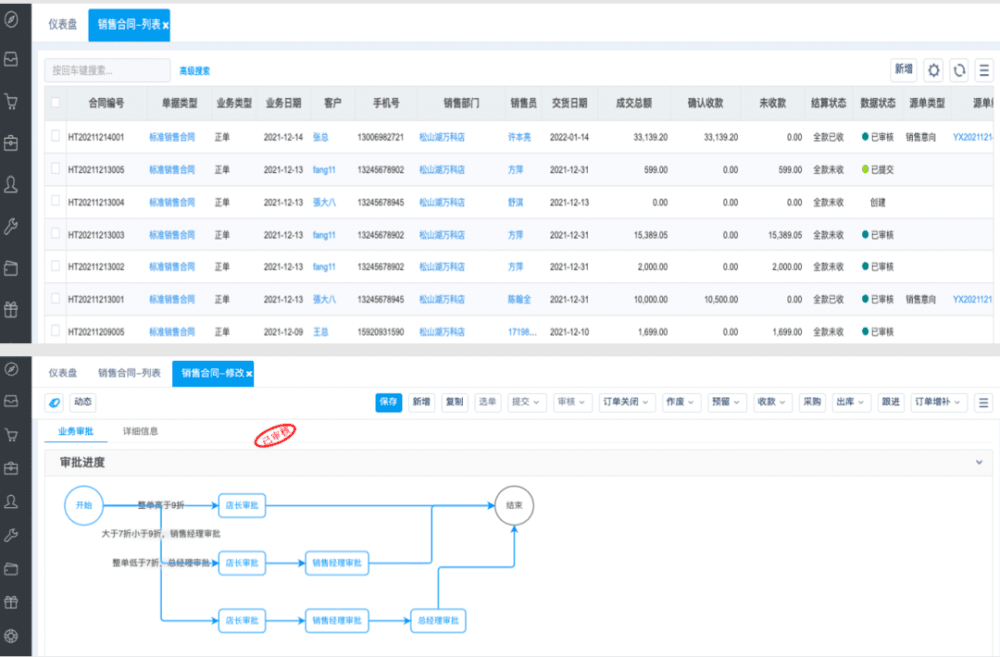
Sales Order Generation Diagram
Warehouse management fully utilizes the barcode system, covering business scenarios such as procurement inbound, sales outbound, inventory transfer, and other inbound/outbound processes, achieving refined inventory management and real-time feedback and tracking of all inbound/outbound transactions.
Inbound Process: After goods arrive at the warehouse, warehouse personnel perform inbound operations in WMS based on the arrival documents. Using the WMS mini-program, scan the location barcode and inbound product barcode with a mobile phone. Warehouse personnel then simply place goods on the designated shelf. No missed packages, no lost packages, automatic accounting.
Stocktaking Process: Via the WMS mini-program, scan location barcodes and product barcodes using a mobile phone. No manual entry of stocktake data required; stocktake efficiency improved by at least 60%. Relevant personnel can conduct stocktakes and spot checks anytime, anywhere, shortening the stocktake cycle and significantly improving work efficiency and accuracy.
Outbound Process: Via the WMS mini-program, scan outbound product barcodes with a mobile phone. The system automatically checks product barcode information based on preset rules, verifies product completeness, and prevents wrong or missed shipments.
Additionally, the system provides inventory alerts and global inventory analysis, supporting multi-dimensional statistical analysis of inventory quantity, turnover, etc., by time, region, organization, channel, and product. Dealers can coordinate inventory scheduling and reasonably plan shipment schedules; they can query real-time inventory, summary of goods received/sent, and receipt and dispatch details; increasing inventory turnover rate and saving costs.
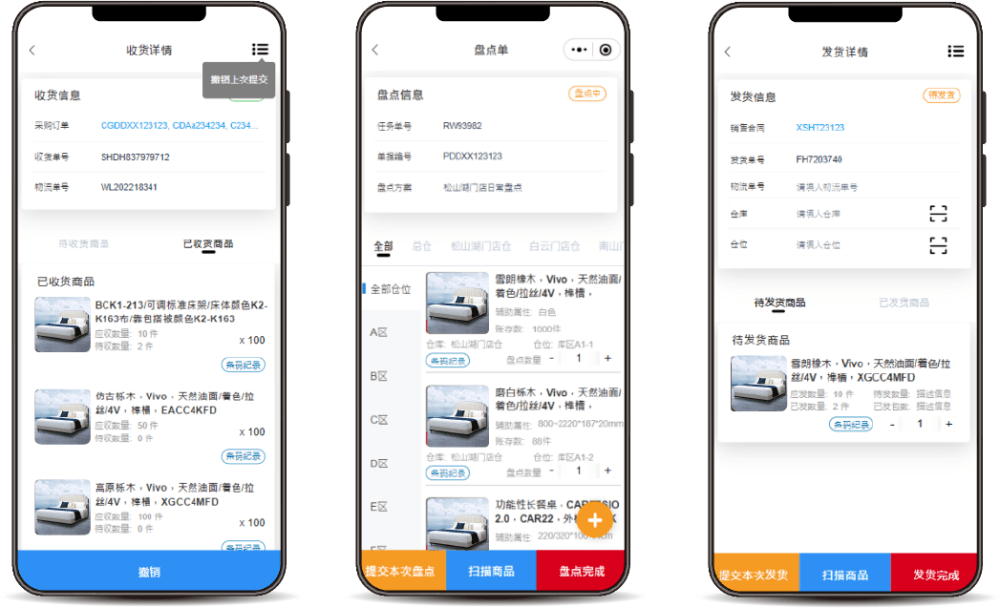
WMS Mini-Program Operation Diagram
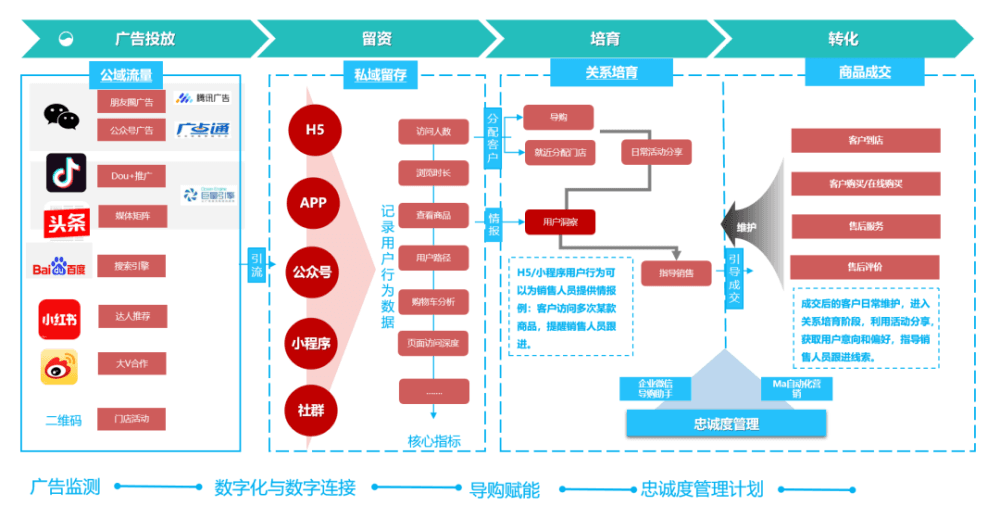
Opportunity Assignment Diagram
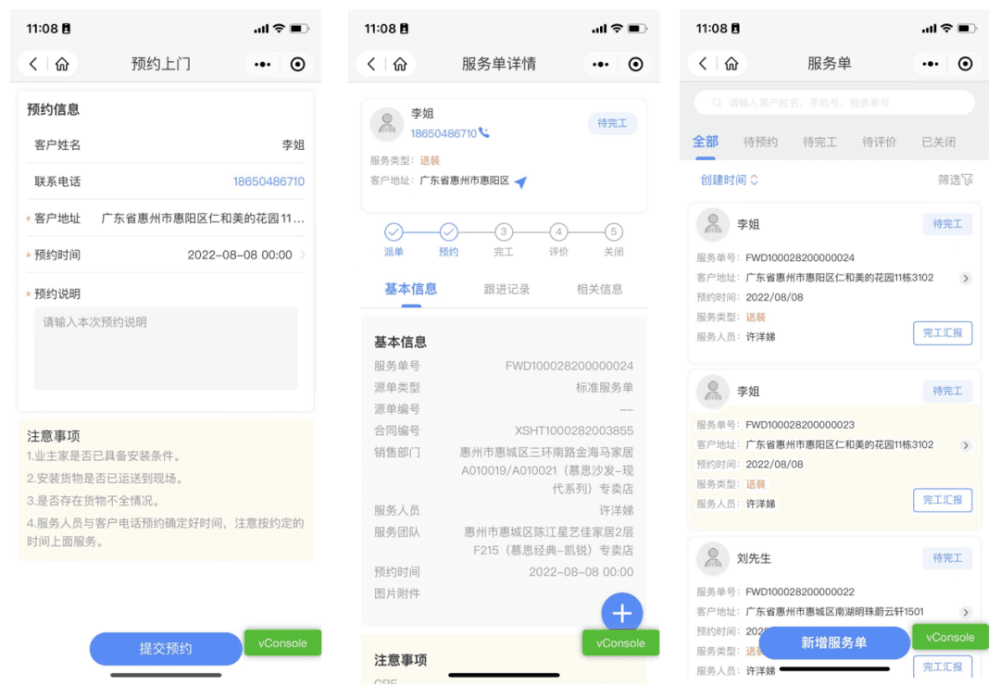
Service Order DisplayDiagram
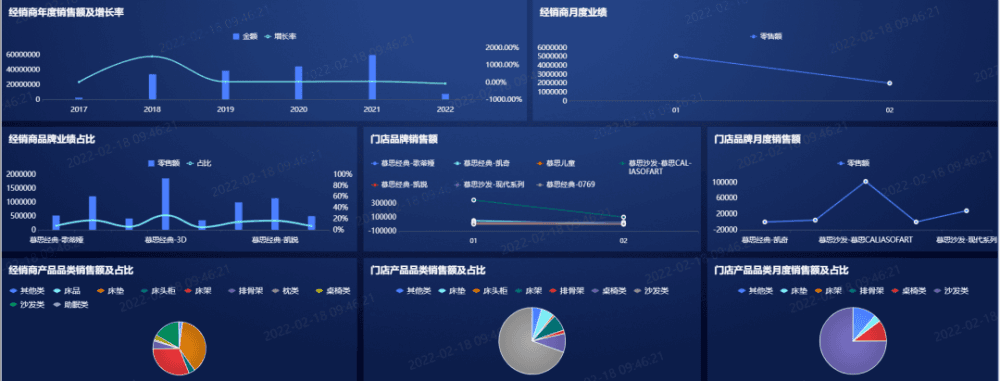
Data Analysis Report Schematic
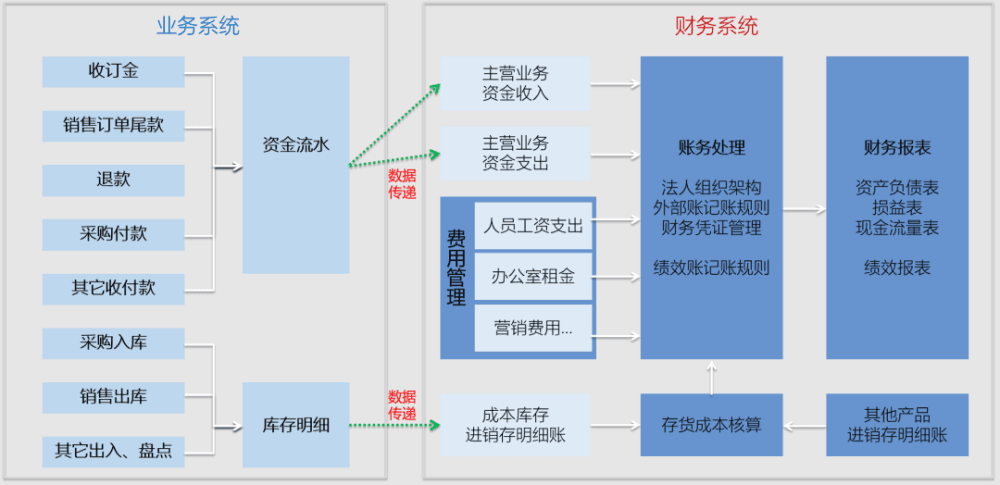
Business-Finance Integration
05
Project Value
At the same time, De Rucci and Jienuoestablished a joint team,to promote the system to De Rucci's national dealers.Establish an internal team combining "Supervisor + Dedicated Instructor + IT" for each dealer, providing full-process guidance,sharing all their expertise,matching and recommending required functions based on the dealer's management level to achieve a "turnkey" information experience. Empower dealers and enhance their operational management capabilities.
In the future, Jeno will forge a strong alliance with De Rucci, advancing hand in hand!

Highlights from the promotion of the De Rucci Dealer Basic Operation Platform: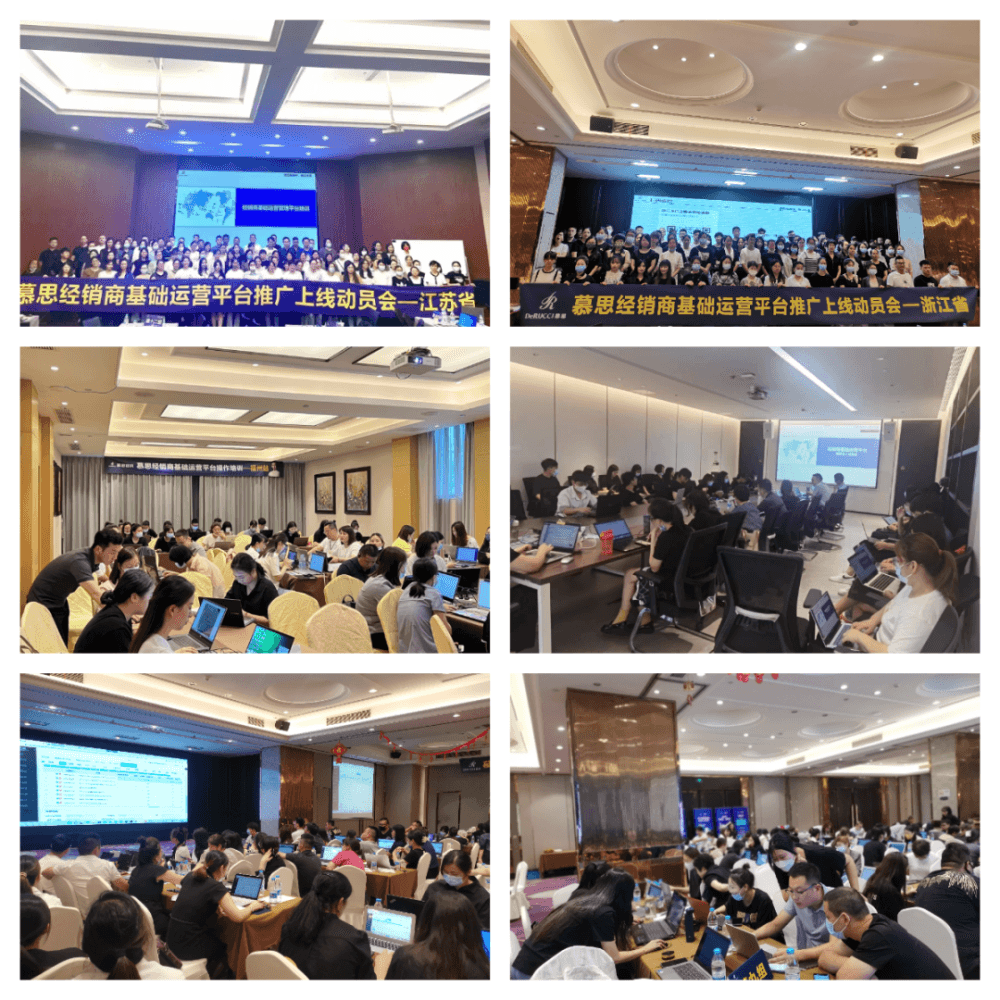


Lantian Home: Taking Initiative to Break Through Management Bottlenecks
Jeno Technology Receives Strong Recommendation from Guangdong Custom Home Furnishing Association

Guangdong Jeno Software Technology Co., Ltd. is a leading provider of full-scenario, full-link digitalization in the pan-home industry, assisting home enterprises in establishing operational digital systems, building industry digital service systems, and enhancing industry service capabilities. The company independently developed the Yidaojia software platform, incorporating the best business practices of top-tier enterprises. Solutions and product applications cover front-end marketing lead generation (CRM), dealer collaboration, omni-channel business middle platforms, design order-splitting data integration, integrated business-finance-tax management (ERP), production process management (MES), digital lean production lines (DTPS), after-sales and delivery/installation services, among others, spanning all scenarios and links.Possessing over 100 software copyrights and patents, recognized as a National High-tech Enterprise and holding Dual Soft Certification. Sample clients in the home furnishing industry include Oppein Group, MinhuaHoldings, Shangpin Zhaipei, De Rucci, Mengtian Home, Louvre, Kefan, Aiyuiris, and other industry-leading enterprises. It serves as a strategic ISV partner of Kingdee Group for the pan-home industry and a Huawei Cloud ecosystem partner. The company headquarters is located in Dongguan Songshan Lake Innovation Industrial Park, with a product R&D center established in Shenzhen. It has direct subsidiaries in Shenzhen-Huizhou, Guangzhou-Foshan, and East China, and has developed service partners in important cities across the country.